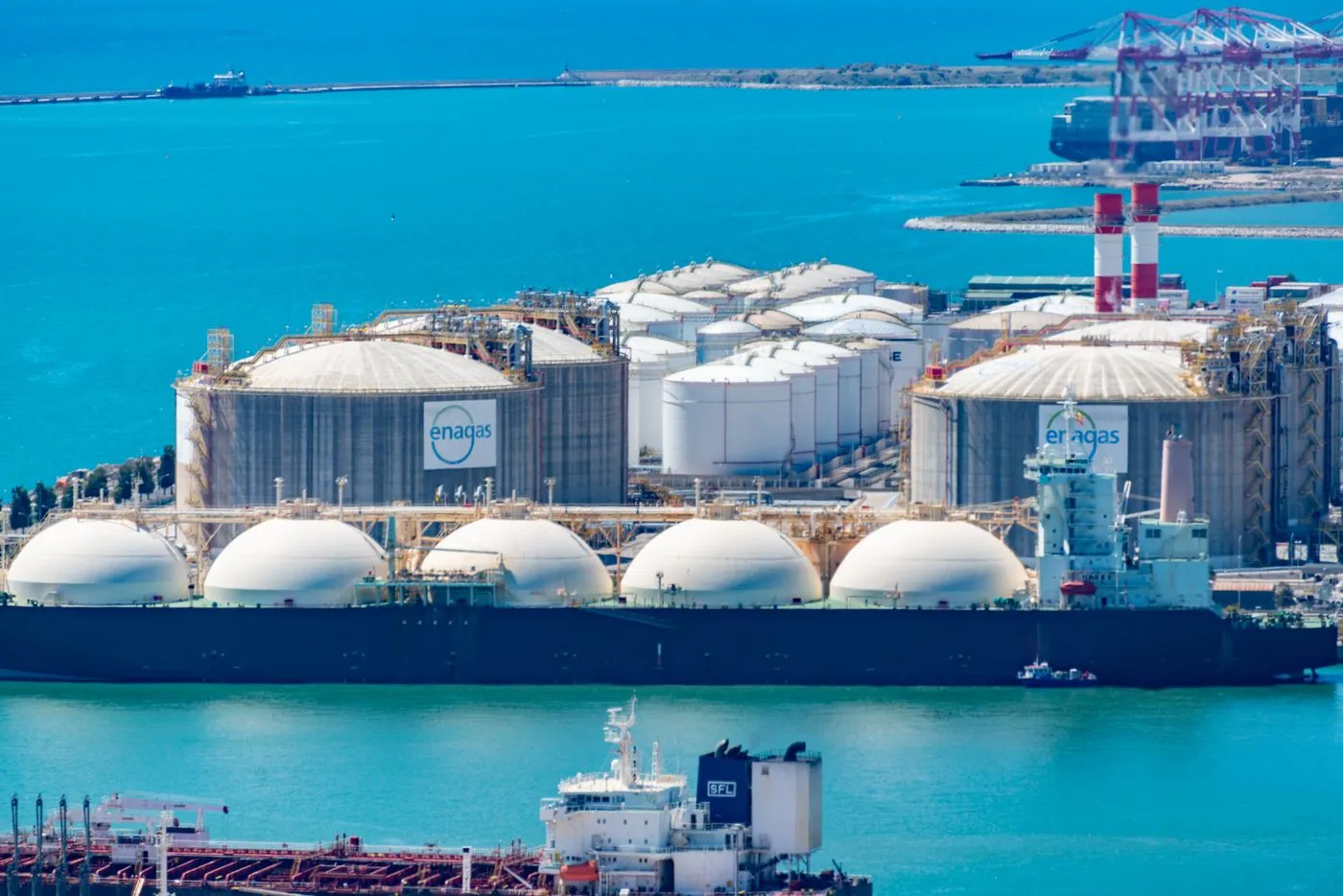
Europe enters the final weeks of 2022 with gas storage levels above the five-year average and lower consumption than many expected earlier in the year. That is an important achievement. It is not a reason for complacency.
The International Energy Agency estimates that European Union gas demand will fall by around 10 percent in 2022, equal to roughly 50 billion cubic metres. Part of that reduction reflects policy and efficiency. Part reflects unusually mild autumn weather. A significant part also reflects industrial demand destruction caused by high prices.
The challenge for 2023 may be more difficult. Europe could begin the next storage-filling season with lower Russian pipeline flows, greater competition for LNG and less help from temporary factors. The infrastructure lessons from this year therefore matter well beyond the coming winter.
Lesson one: diversification must exist in physical assets
Energy security is often discussed as a purchasing strategy. The events of 2022 show that diversification must also exist physically. A contract with a new supplier is useful only if the gas can reach the market through available production, pipelines, vessels, terminals and downstream networks.
Europe has increased LNG imports rapidly, but those cargoes depend on global liquefaction capacity and a fleet of vessels already serving other buyers. The IEA reported that Europe’s LNG demand rose sharply during 2022, redirecting trade flows and tightening the market for importing countries elsewhere. This is a reminder that one region’s diversification can create pressure in another.
Future energy strategies should test the full delivery chain. The question is not simply whether an alternative source exists. It is whether the source can be contracted, transported, received and distributed under stressed conditions. Energy security is not only a question of who supplies the fuel. It is a question of whether the entire system can move, store and use it under stress.
Lesson two: storage is strategic infrastructure
Gas storage moved from a commercial optimisation tool to a central element of public security in a matter of months. The European Union introduced obligations requiring underground storage to reach at least 80 percent before the 2022 to 2023 winter and 90 percent before later winters.
Volume alone is not enough. Storage must be assessed in terms of withdrawal rates, regional location, connection capacity and access rules. A country can have gas in storage and still face constraints if the network cannot move it to where demand is concentrated. Countries without domestic storage also depend on cross-border agreements and solidarity mechanisms.
The wider lesson applies to other energy systems. Strategic storage, reserve capacity and operational redundancy may look expensive during normal conditions. Their value becomes visible when the market is disrupted.
Lesson three: an LNG terminal is part of a system
Europe has accelerated floating and onshore LNG terminal plans. These assets can add flexibility faster than major pipelines, but they are not stand-alone solutions.
A terminal needs berth access, maritime services, regasification capacity, grid connection, pipeline capacity, metering, safety systems and commercial arrangements for onward delivery. If downstream networks are constrained, new import capacity may not reach the regions most exposed to supply loss.
The same principle applies to project development more broadly. A sponsor may announce a terminal, interconnector or storage facility as a single asset, while the actual service depends on several adjacent investments. Those interfaces should be identified before procurement, not after construction begins.
Lesson four: interconnection determines resilience
The crisis has underlined the importance of the European internal market. Cross-border pipelines, reverse flow capability and common operating rules allow gas to move from coastal import points and storage locations towards landlocked or highly dependent markets.
Interconnection also requires political coordination. During scarcity, each government faces pressure to protect domestic consumers. Infrastructure can only support regional resilience if rules, emergency procedures and commercial arrangements allow it to be used across borders.
This should influence future project appraisal. The value of an interconnector is not limited to normal trading revenue. It also creates options during disruption. That resilience value needs to be recognised when public sponsors decide which projects to advance.
Lesson five: demand flexibility is infrastructure policy
Europe’s response has included energy savings, fuel switching, efficiency measures and reduced industrial production. The IEA warns that the remaining 2023 gap should be closed through structural measures where possible, rather than repeated price spikes or further industrial curtailment.
Demand flexibility is often treated as a behavioural issue. In reality, it depends on equipment, controls, building performance, industrial process design, heat pumps, digital systems and access to alternative energy sources. It is therefore an infrastructure and capital investment issue as much as a public campaign.
The cost of unmanaged demand reduction is also uneven. Fertiliser, metals, glass and chemical producers have faced severe pressure. When production closes, Europe may reduce domestic gas use while increasing reliance on imported energy-intensive goods. Energy security decisions must therefore consider industrial capability and supply chain resilience together.
What this means for future projects
The first change should be in project assumptions. Energy projects should be tested against disruption cases, not only central forecasts. Sponsors need to understand what happens if one supply route is unavailable, if LNG prices remain elevated, or if key infrastructure is delayed.
The second change concerns sequencing. Import terminals, storage, grids, renewable generation, efficiency and industrial conversion are connected. Advancing one element without the others can create stranded or underused capacity.
The third change concerns contracts. Long-term agreements, destination flexibility, indexation and capacity reservations have returned to strategic importance. The objective should not be to eliminate market exposure, which is impossible, but to prevent a single market condition from threatening the whole system.
Europe has managed the immediate shock through a combination of storage, imports, mild weather, lower demand and emergency action. The durable response will be measured by the infrastructure and operating flexibility built before the next disruption.