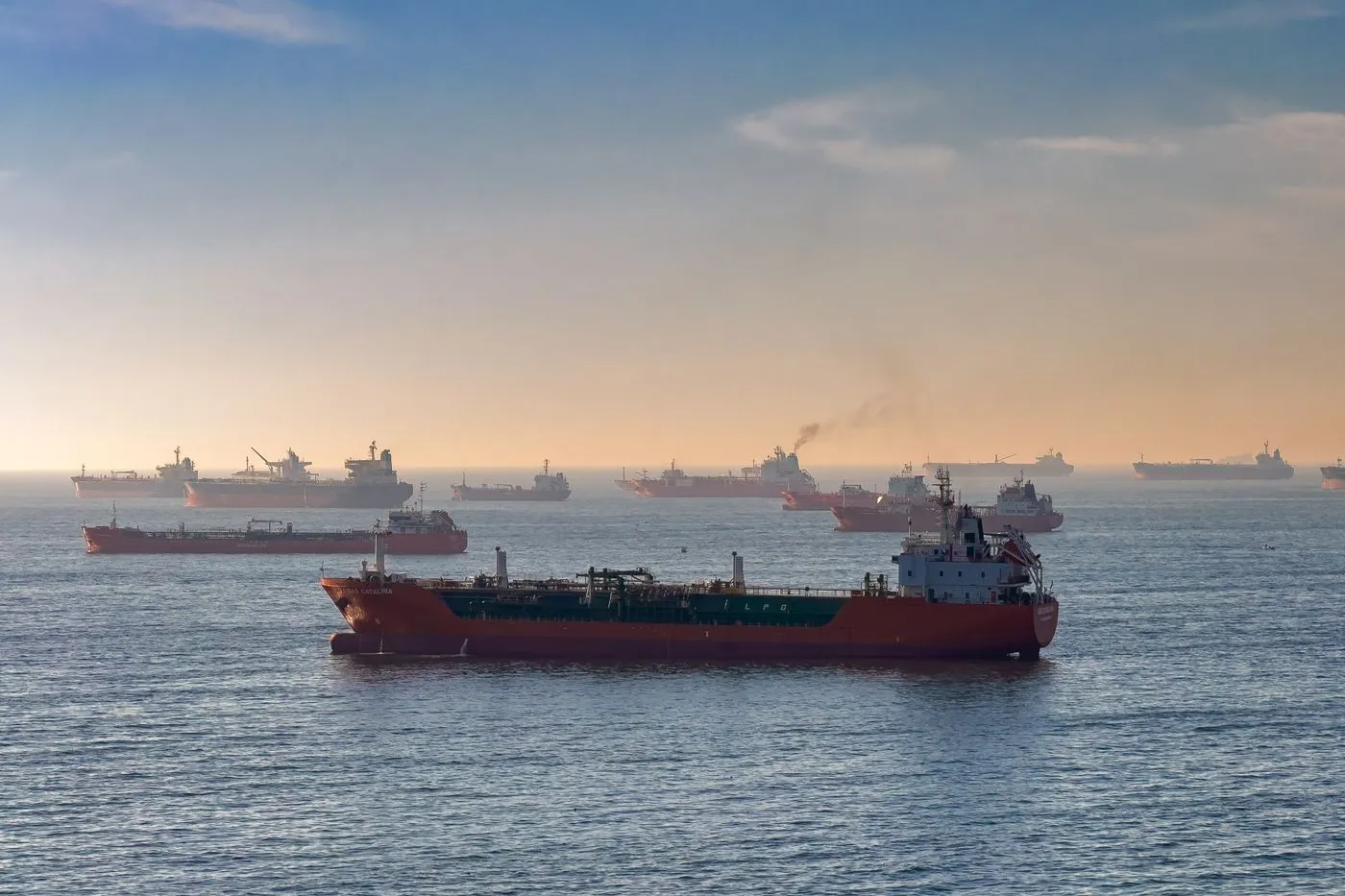
Regional conflict has changed the operating assumptions for projects across the Gulf. The immediate concern is security, but the effect on infrastructure runs much further. Shipping restrictions, attacks on commercial vessels, navigation interference and uncertainty around the Strait of Hormuz have exposed how many programmes depend on a narrow set of routes, suppliers and operating conditions.
In March 2026 the International Maritime Organization condemned attacks on merchant shipping, warned of extensive jamming and spoofing affecting satellite navigation, and called for a coordinated safe-passage framework for vessels trapped in the Gulf. A week later the World Bank reported that shipping disruption was raising costs and spreading supply risk from energy into fertilisers and other agricultural inputs, recording sharp increases in crude oil, liquefied natural gas and nitrogen fertiliser prices between February and March.
The lesson for sponsors is not that investment should stop. It is that resilience can no longer be treated as a general risk-management statement.
A chokepoint is not only an oil market issue
The Strait of Hormuz is usually discussed through oil prices and tanker traffic. For infrastructure programmes its importance is broader. The Gulf imports large volumes of construction equipment, electrical systems, industrial components, chemicals, replacement parts and specialist materials, and project teams depend on international personnel, marine services, insurance, port operations and predictable customs procedures. When maritime traffic becomes unsafe or irregular, pressure appears across several workstreams at once.
These effects are not confined to projects near the Strait. A desalination plant on another coast, an inland solar project or an industrial facility in a different Gulf state may still depend on components routed through regional distribution centres. The physical location of a project does not reveal the full extent of its exposure.
Resilience begins with mapping dependencies
Most risk registers contain categories such as geopolitical risk, force majeure and supply chain disruption. Those categories are too broad to guide a decision.
A useful assessment starts with the critical path and identifies the exact dependencies that can interrupt it: which packages depend on maritime access, which suppliers have alternative production sites, which components can be substituted without redesign, which ports can handle oversized cargo, and which contractual approvals are required before a route or supplier can change. The same analysis should cover people and operations, from commissioning specialists who travel from Europe or Asia to survey, dredging and installation vessels that cannot be replaced quickly.
The question is not whether disruption is possible. It is how long the project can continue before each dependency becomes critical.
Procurement strategy must change before tendering
Conventional procurement rewards price, technical compliance and schedule. In a volatile environment it must also test adaptability. A supplier offering the lowest price from a single manufacturing location may be less competitive once route risk, insurance and replacement time are considered. A contractor with regional warehouses, alternative ports and prequalified substitute vendors may offer greater value at a higher headline price.
Tender documents should ask bidders where critical equipment will be manufactured, how it will be transported, what alternatives exist and how quickly the supply plan can change. This matters most for long-lead items: turbines, transformers, compressors, pumps, membranes, control systems and specialised valves determine the whole construction schedule, and flexibility falls sharply once they are ordered.
Early procurement helps but is not a complete answer. Buying sooner can simply move the exposure into storage, and the project still needs a secure route, suitable warehouse conditions, customs planning and control over warranties.
Contracts need operational answers, not only legal wording
Force majeure clauses will be tested during a regional conflict, but legal entitlement does not keep a project moving. Contracts should define how the parties respond when routes become unavailable, insurance changes or deliveries are held at an intermediate port: who may approve alternative suppliers, what evidence supports a claim for additional cost, and how security restrictions affect time obligations.
The contract should also distinguish a genuine external event from a contractor’s failure to prepare. Where a supplier had known concentration risk and did not disclose it, the sponsor should not automatically carry the consequence. Equally, a contractor cannot be expected to absorb an open-ended security event that fundamentally changes access to the site. What matters most is an agreed decision process: escalation routes, rapid technical approval and a method for assessing schedule consequences while the facts are still developing.
Alternative corridors must be tested, not merely named
Projects often claim alternative routes without proving they are usable. A different port may lack the crane capacity for heavy equipment. A land corridor may involve multiple borders, permits and escorts. An alternative shipping route may add weeks and require different packaging. Some cargo may simply be too large for the road network between port and site.
Route studies should therefore be practical, covering port handling, inland transport, customs, security, temporary storage, road geometry and the availability of specialist contractors, with the cost and time to activate each alternative made explicit.
Financing and commercial assumptions need stress testing
Higher shipping, insurance and commodity costs can affect the capital requirement before any delay occurs. A fixed-price EPC contract appears to transfer cost risk, but the transfer fails if the contractor cannot obtain insurance, faces prolonged suspension or enters financial distress. Sponsors should examine the resilience of the contractor and its key suppliers, not only the wording of the contract.
Revenue assumptions matter equally. Ports, terminals and logistics facilities may see lower throughput. Energy exporters may receive higher prices on lower volumes. Utilities may face higher input costs against fixed tariffs. Scenario analysis should test a short disruption, a prolonged restriction and a wider escalation, identifying for each the decisions required and the financial capacity to support them.
Governance carries direct commercial value
Conflict produces a high volume of incomplete and sometimes contradictory information. Without disciplined governance a project team either reacts too slowly or makes expensive decisions on rumour.
The programme should establish a small decision group with authority over security, logistics, procurement, schedule and commercial matters, reporting on verified operational facts: vessel availability, port status, cargo location, insurance conditions, supplier readiness and workforce access. It should maintain a decision log and define trigger points in advance, such as activating an alternative port once expected delay passes a set period.
The response should be selective, not defensive
It would be wrong to conclude that conflict makes Gulf projects unviable. The region retains strong infrastructure needs, significant public investment capacity and strategic importance, and disruption may accelerate investment in storage, alternative ports, regional manufacturing, energy security and resilient utility systems.
The more useful conclusion is that project quality is now judged differently. A credible project must demonstrate not only demand, financing and technical feasibility, but resilience in its routes, suppliers, operating model and governance. The programmes that continue through volatility will not necessarily be those with the largest announcements. They will be those whose sponsors understand their dependencies and have prepared realistic alternatives.